6 Days Birding in Malaysia – 17-22 June 2026
The plan was simple: six days, six people in 2 teams, one international bird race, and as many species as Fraser’s Hill would give us. What we got was more than that. A trogon every single day, an eagle that bookended the trip, a snake that nearly went unnoticed, and one incident involving a laser pointer that I have not stopped thinking about since.
This is a full account of the trip, day by day.
Day 1 – Wednesday, 17 June | Arrival and Taman Rimba Kiara
The trip started the moment the plane touched down. After clearing immigration and sorting bags, the first stop before heading to the hotel in Shah Alam was a birding detour at Taman Rimba Kiara, a compact urban forest in Wilayah Persekutuan Kuala Lumpur that consistently delivers for a city park.
One of the first things that stood out arriving in Malaysia, even before any serious birding, was the Large-billed Crow. In Indonesia, crows are genuinely rare and seeing one is an event. Here they were everywhere: at the airport, around I-City, along the roads. Common as sparrows. It takes a moment to recalibrate when a species that would stop a session back home is just background noise at a Malaysian petrol station.
There was no vending machine at the park, so we had to take a break mid-session, grab lots of water from the nearby mini market, and find somewhere to eat. I had rice, beef in a brown sauce (the beef was very tender), a boiled egg, and kopi o. Simple food but exactly what the situation called for.
The session ran from 11:10 AM, covering 0.6 km over 5 hours with a group of 5. A good start for a transit day: 7 species, 30 individuals.
Species recorded:
- White-throated Kingfisher (1)
- Lineated Barbet (5)
- Banded Woodpecker (2)
- Black-thighed Falconet (3)
- Black-naped Oriole (2)
- Asian Glossy Starling (15)
- Common Myna (2)
might have missed some on the ebird list, like the javan myna
Both the Banded Woodpecker and the Black-thighed Falconet were observed at nesting sites. Seeing one of the world’s smallest raptors actively nesting inside the city is a reminder that Kuala Lumpur’s green corridors are doing more conservation work than they get credit for. We kept our distance, noted the behavior, and moved on.
Afterward: check in at Asdeh Suites, I-City Shah Alam.


Day 2 – Thursday, 18 June | Taman Botani Negara Shah Alam
The first full birding day was spent at Taman Botani Negara Shah Alam, a botanical garden in Selangor with pockets of genuine lowland forest habitat. Started at 9:52 AM, 6 birders, 8 hours, 1.8 km. Result: 20 species, 40 individuals.
Highlights:
- Raffles’s Malkoha (2)
- Changeable Hawk-Eagle (1)
- White-bellied Sea-Eagle (1)
- Blue-throated Bee-eater (6)
- Black-and-yellow Broadbill (2)
- Long-tailed Parakeet (2)
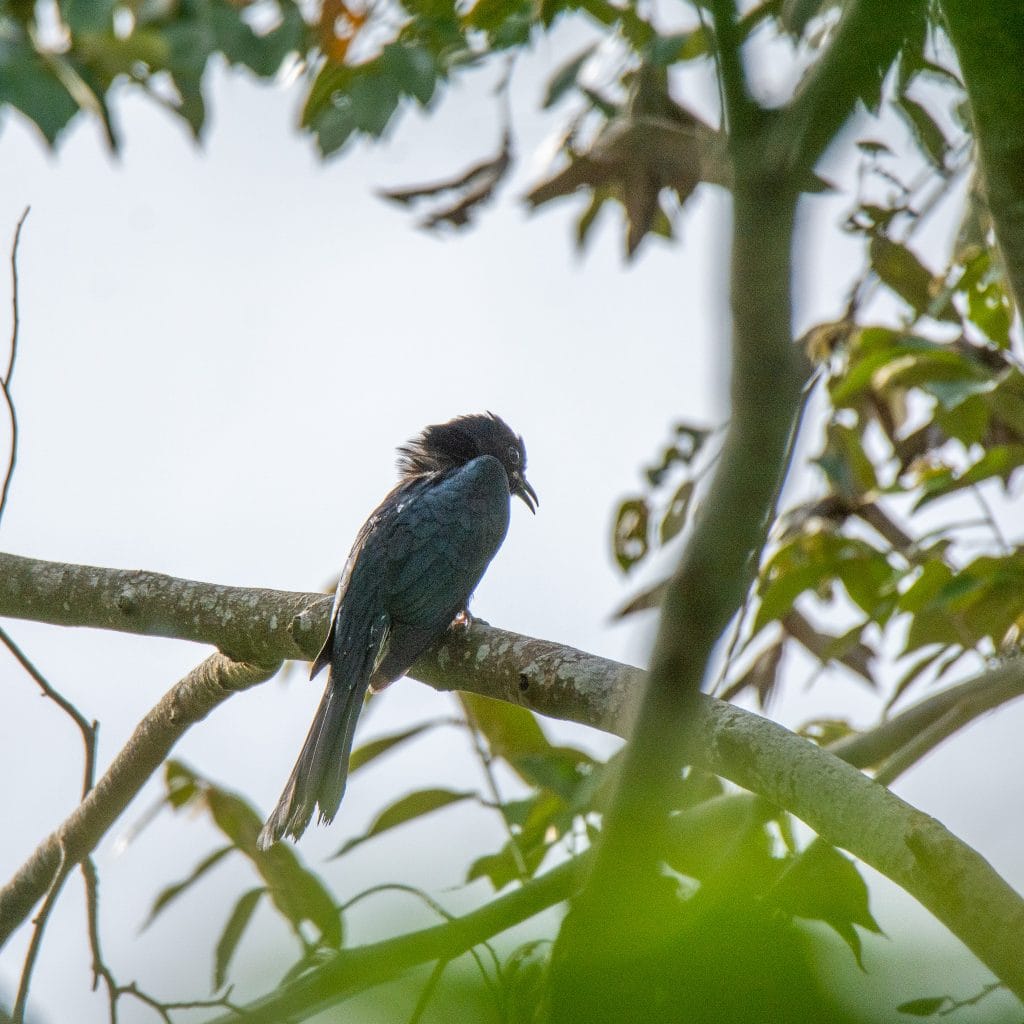
- Greater Racket-tailed Drongo (3)
- Crimson-breasted Flowerpecker (1)
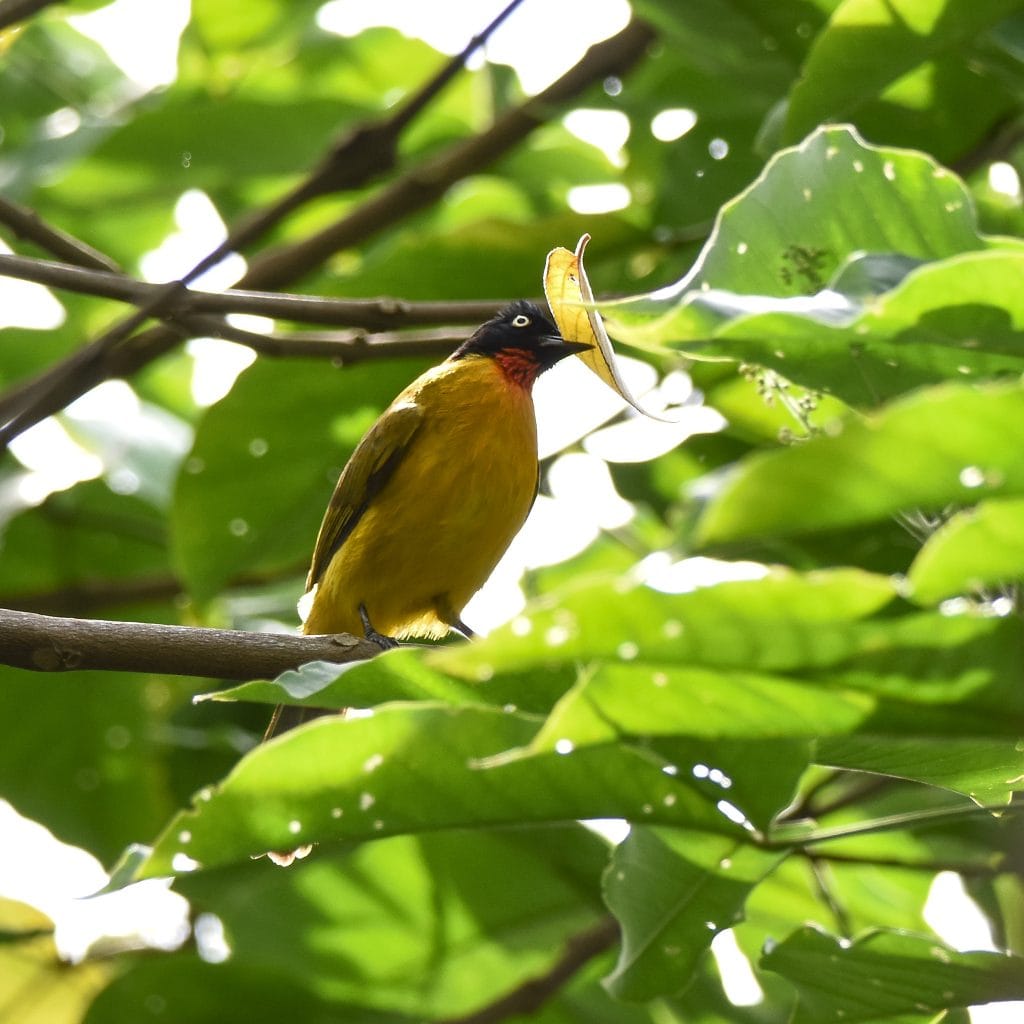
- Blue-winged Leafbird (2)
- Common Hill Myna (1)
- Black-winged Flycatcher-shrike (1)
- Common Iora (1)
- Olive-winged Bulbul (1)
- Oriental Magpie-Robin (3)
- Asian Openbill (5)
The Blue-throated Bee-eater was the standout of the day. Six birds were active along the same open patch, hovering and returning to perch repeatedly. Extended shooting time, great light, hard to leave.
The Black-and-yellow Broadbill gave even better than just a perched bird. It was actively building a nest, the characteristic long hanging structure that broadbills weave from a branch tip. A few frames to document it, then the group backed off and left it alone. The species stayed on the list, the nest stayed undisturbed.
Evening: back to the hotel, bags repacked for the highlands.


Day 3 – Friday, 19 June | The Drive Up and First Taste of Fraser’s Hill
The drive up to Fraser’s Hill (Bukit Fraser) is an experience in itself. The single-lane road alternates direction by the hour, cool mist rolls in, and montane forest presses right up against the tarmac the whole way up. The elevation gain is fast and the atmosphere changes completely. The road is also mercilessly winding, hairpin after hairpin with no reprieve. Somewhere just before the Welcome to Fraser’s Hill sign, the car had to stop. I stepped out and threw up by the roadside. Not the most dignified arrival, but we are ready to gather lifers at Fraser’s Hill.
Checked in at The Pines and went straight out. The area was completely new to us and nobody was sure yet where the good spots were. More pressingly, nobody knew where to get food. Time was wasted looking for a restaurant, which ended up canceling the plan to visit Bishop’s Trail that afternoon. No food, not prepared, not the right call. A lesson learned on day one at the hill.
Instead, the afternoon route covered what was reachable: The Pines, to the Bishop’s Trail entrance, back toward the paddock, then Lady Guillemard Road, and finally dinner at Catelya. That first Catelya meal set a pattern for the next four days. The gift shop next door also turned out to serve a genuinely good cup of coffee, worth stopping at every morning.
On the food at Catelya: the chicken chop with fried rice is very filling, though at RM 30 it is on the pricier side. The better daily option was nasi bujang, which is rice, a fried egg, chilli, and plain soup for only RM 6. Simple and does the job. Payment by QRIS is accepted.
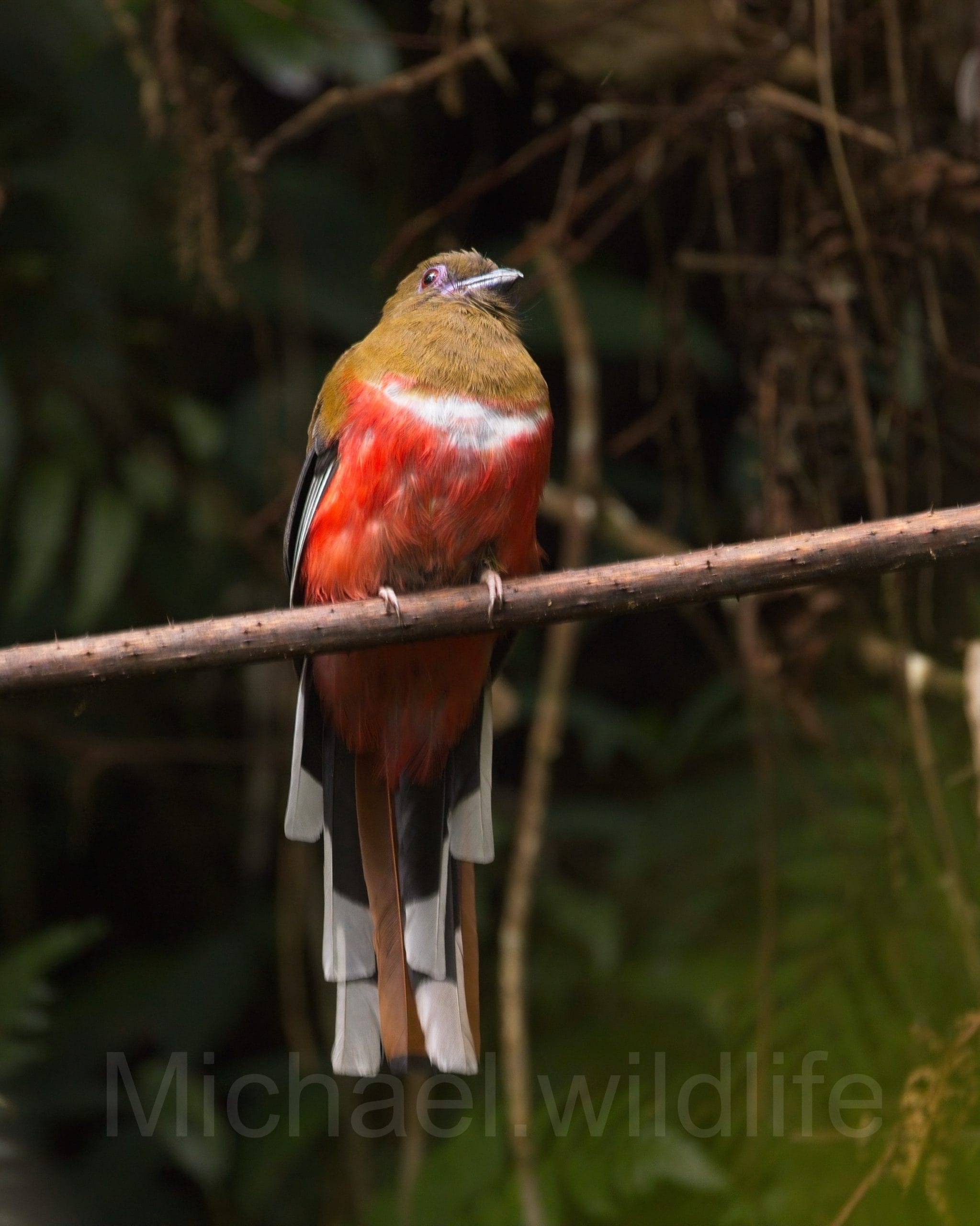
The birding that first afternoon was already exceptional. Walking down from The Pines toward Lady Guillemard, near a camping area, a small group of Mountain Fulvettas and White-throated Fantails was working the low vegetation. Camera already out, framing the fantails, when a Red-headed Trogon dropped out of nowhere and landed on a cable less than 2 meters away. It just sat there. No warning, no dramatic reveal. One of those moments that takes a second to process because it simply should not be that close, it flew to a tree and perched for a few seconds before flying away.
Species noted on arrival afternoon:
- Red-headed Trogon – male, Lady Guillemard camping area, less than 2m away
- Sultan Tit
- Verditer Flycatcher – 1 adult and 1 juvenile, actively feeding together
- Green-billed Malkoha
- Blyth’s Hawk-Eagle – perched on top of the golf course on arrival
- Mountain Fulvetta
- White-throated Fantail
The Blyth’s Hawk-Eagle on the golf course was a proper welcome. A large eagle, fully visible, watching the group from an elevated perch as everyone settled in. The Verditer Flycatcher pair, an adult feeding a juvenile, was the kind of behavioral observation that makes birding more than just ticking species.
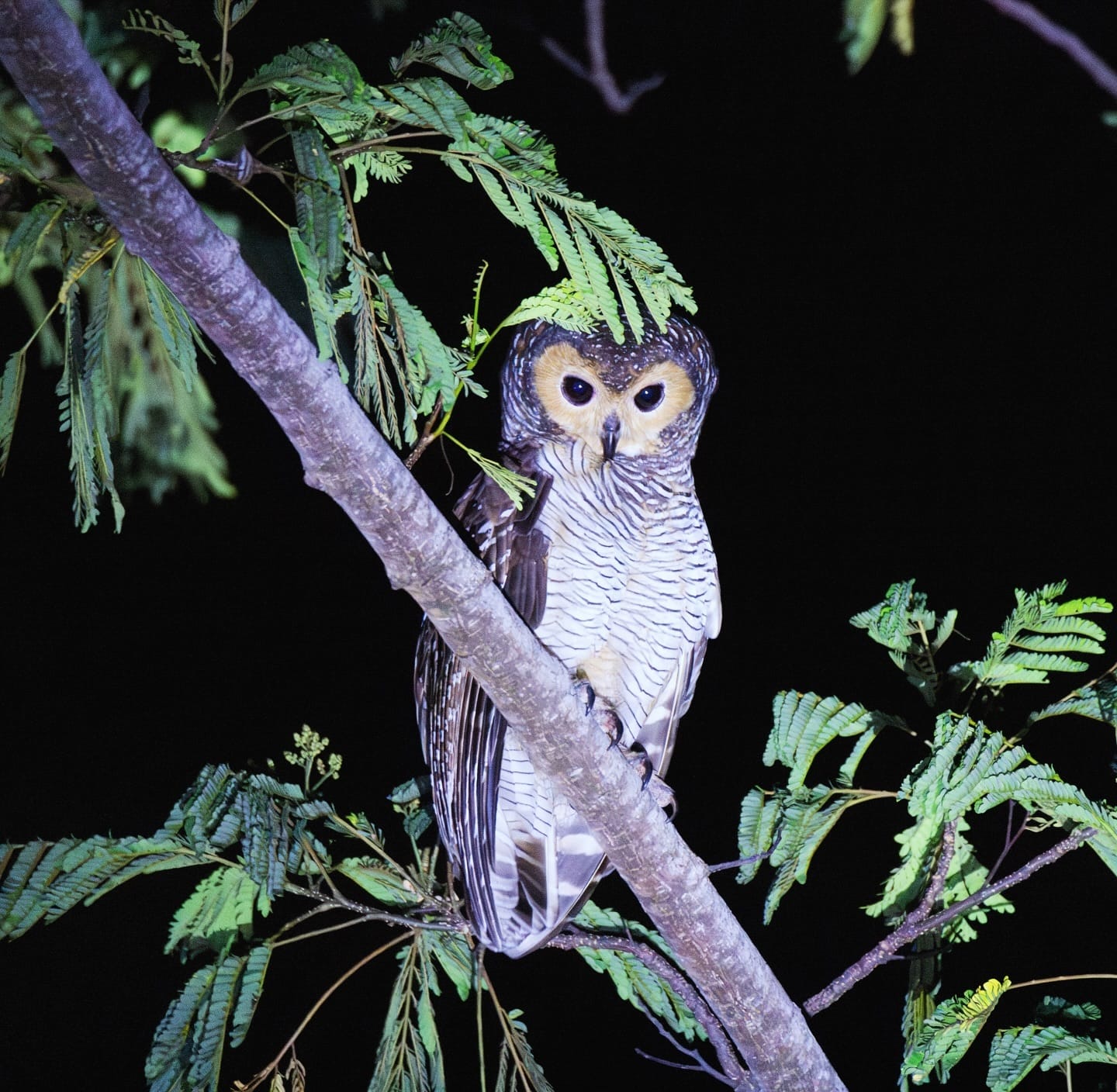
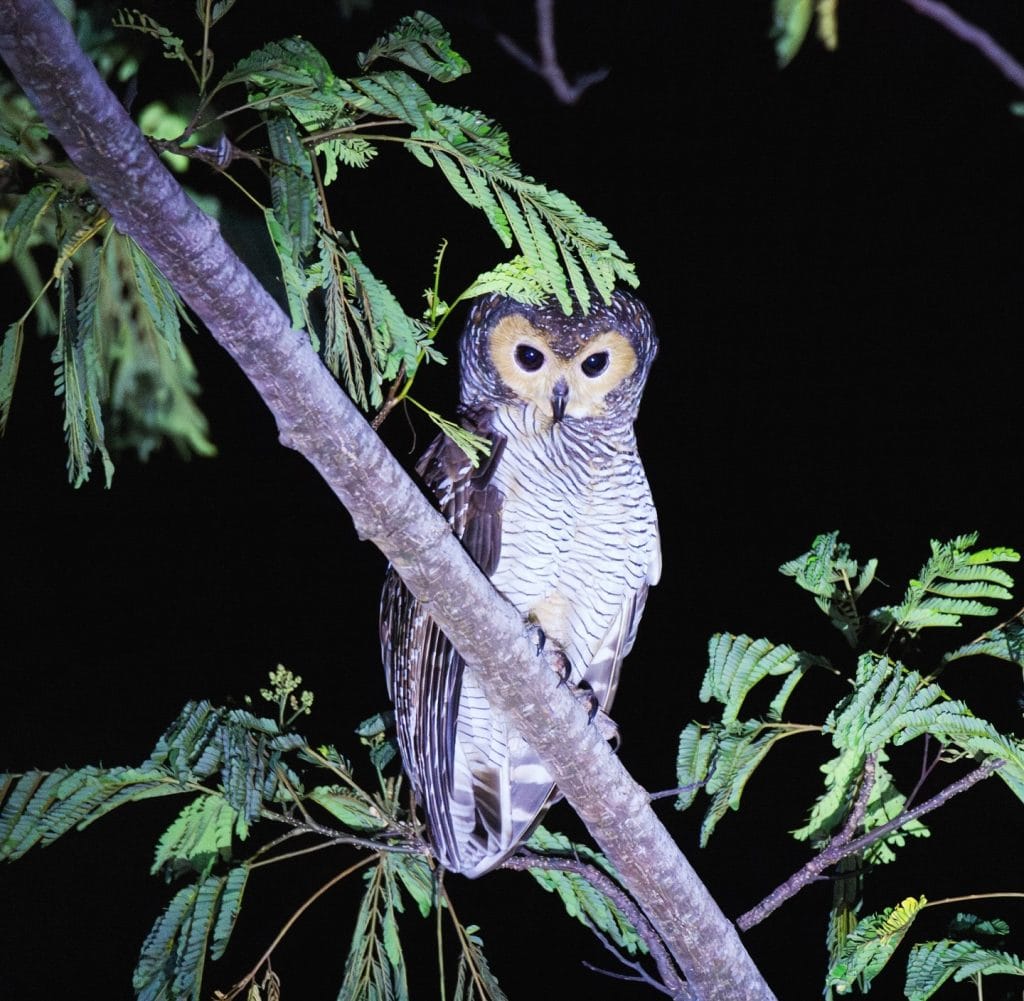
That night at The Pines, the Mountain Scops-Owl started calling. It would call every night and every morning for the rest of the trip. Always heard, never seen.


Day 4 – Saturday, 20 June | Bird Race Day, Clock Tower Start
Race day. The format was a timed area count, with teams racing to record as many species as possible within a set period across the Fraser’s Hill area. The field was international: at least 4 teams from Indonesia, 7 teams from the Philippines, and teams from other countries. A photo contest ran alongside the race and 2 of our teammates entered that competition.
Our group of 6 split into 2 teams of 3 for the race.
Checklist started at 1:30 PM from the Clock Tower area, 1.58 km, 3 hours 49 minutes. 29 species, 43 individuals. The richest single-location list of the trip.
During the race, near the Welcome to Fraser’s Hill sign, a Red-headed Trogon female appeared and sat in the open. Day 2 of consecutive trogon sightings. Then things got out of hand fast.
Word spread the way it only can at a birding event with dozens of photographers in a small area: the bird had been found. Over 40 photographers descended on the spot. Traffic was completely blocked. People were lying on their backs and flat on their chests, rolling into position in the grass to get lower angles. The smell of fertilizer from the lawn filled the air as the crowd pressed in. It was simultaneously absurd and completely understandable. A Red-headed Trogon sitting in the open is not something you walk away from. But the scene had gone well past the point of responsible birding.
Then it got worse.
Someone in the crowd, apparently guiding a group, pulled out a laser pointer to indicate the bird’s location. The first time the laser hit the trogon’s eyes, the bird flushed to a new perch near the toilet. Other birders immediately called it out. The complaint was clear and direct. The individual did not seem to care.
The laser came out again, pointed directly at the trogon’s face. The bird flew and did not come back.
Lasering a bird’s eyes is not a gray area. It causes real harm, including disorientation and potential vision damage. In this case it was done twice to the same bird, with people watching, after being told to stop. The anger from that moment carried through the rest of the day.
Race highlights(some are encountered in the morning or night before the race, and not submitted for the race):
- Mountain Scops-Owl (1) – heard every night, never seen
- Red-headed Trogon (female) – near welcome sign
- Fire-tufted Barbet (1) – endemic to the Peninsular Malaysian highlands
- Long-tailed Broadbill (1)
- Sultan Tit (3)
- White-throated Fantail (2)
- Rufous-bellied Swallow (1)
- Rufous-browed Flycatcher (1)
- White-tailed Robin (2)
- Lesser Shortwing (1)
- Little Pied Flycatcher (1)
- Chestnut-capped Laughingthrush (1)
- Long-tailed Sibia (2)
- Black-throated Sunbird (1)
- Mountain Fulvetta (3)
- Golden Babbler (1)
- Little Cuckoo-Dove (1)
- Oriental Honey-buzzard (1)
At 7:00 PM, the group gathered for the presentation session. I was still finishing the presentation slides while others had already submitted their lists, which meant no chance to chase the partridge being reported elsewhere on the hill.
Dinner at Catelya, then shuttle back.


Day 5 – Sunday, 21 June | Race Day 2, Abu Suradi Trail and the Snake on Hemmant
A slightly later wake-up, which did not help the race score. The race continued with a deadline at 11:55 AM.
The morning started at Abu Suradi Trail. The trail delivered immediately: Red-headed Trogon female, perched calmly in the open. Three consecutive days, three different locations. Also active on the trail were Lesser Racket-tailed Drongo working the mid-canopy and Chestnut-capped Laughingthrush moving through the understorey.
Checklist: 7:33 AM, 4 hours 17 minutes, 2.83 km. 17 species, 22 individuals.
Other race day 2 highlights:
- Mountain Imperial-Pigeon (2)
- Blyth’s Hawk-Eagle (2)
- Golden-throated Barbet (1) – juvenile
- Black-browed Barbet (1)
- Silver-breasted Broadbill (1)
- Gray-chinned Minivet (3)
- Silver-eared Mesia (1)
- Blue Nuthatch (1)
- Malayan Whistling-Thrush (1)
- Streaked Spiderhunter (1)
- Ochraceous Bulbul (1)
- Hume’s White-eye (2)
Lists submitted at 11:55 sharp.
After submission, the group moved to Hemmant Trail. The trail was quiet for birds until someone nearly put their hand on what looked like a harmless green snake resting low on the vegetation. Then someone got a proper look at the head. Triangular. Pit viper. A juvenile green pit viper, almost perfectly camouflaged against the stems and leaf litter, sitting right where hands and feet tend to go on a narrow trail. We backed off slowly, gave it space, and moved on. A reminder that Fraser’s Hill trails are not just about the birds.
The rest of the afternoon was relaxed birding with no pressure: longer looks, better compositions, time to actually enjoy the forest.
Our two teams combined recorded 33 species on race day. Not a strong result. Looking back, the reason is straightforward: the whole group came in with a photographer’s mindset. There was no pure birder in the team. Before moving on from any bird, we needed a good photograph. Other teams worked completely differently. They would spot a bird, take a quick shot for evidence, and move on immediately. We stayed, framed, waited for better light, tried different angles. That works beautifully for photography. It is not how you win a bird race. We were slower, covered less ground, and missed species other teams found. A lesson for next time.


Day 6 – Monday, 22 June | Final Morning and the Farewell Eagle
Last morning. Early start at 8:09 AM, smaller group of 4, 3.08 km over 6 hours 12 minutes. 21 species, 63 individuals. The highest individual count of the entire trip.
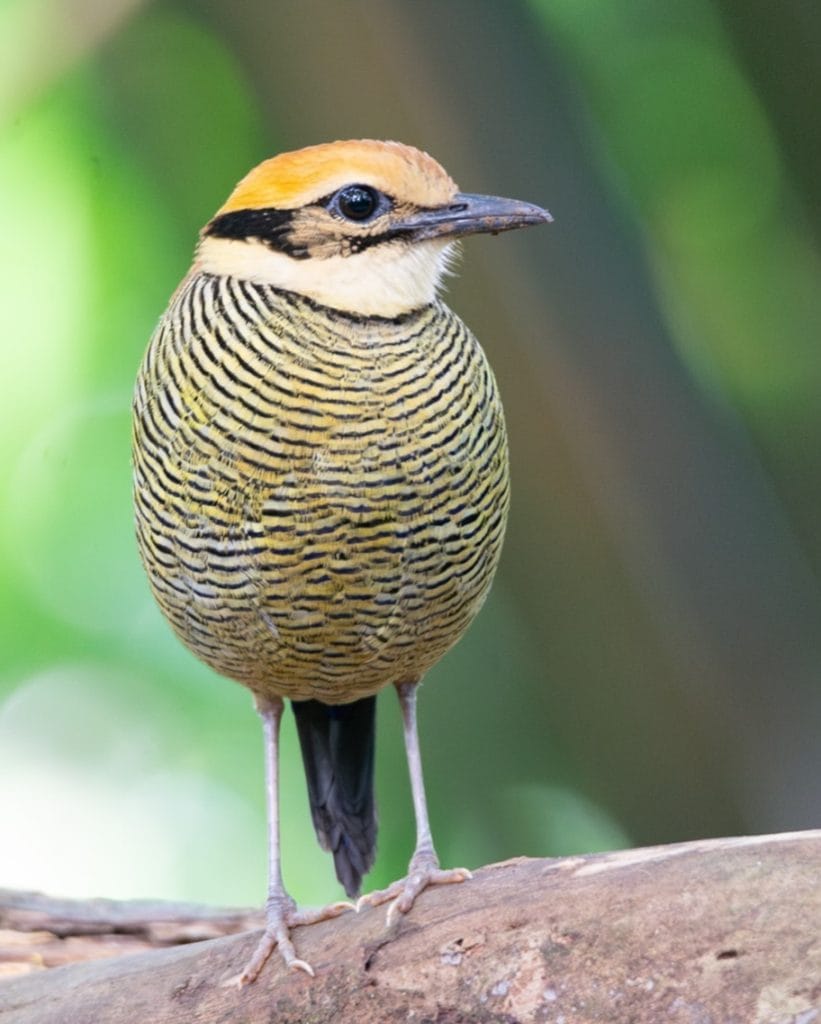
The two teams split routes. My team headed toward MAGR Road targeting Pitta and Partridge, two of the great Fraser’s Hill targets that had stayed elusive all trip. The partridge had apparently just moved through before we arrived. The pitta was not showing. What MAGR Road delivered instead was Chestnut-capped Laughingthrush in numbers, and then near the same stretch where the Day 3 trogon had perched on that cable, a Long-tailed Broadbill appeared on the way to grab snacks. A small moment of symmetry on the last day.
The Red-headed Trogon also showed one final time on MAGR Road. Female, calm, cooperative. Four consecutive days, four different locations, all photographed.
The trogon streak:
Day 3 | Lady Guillemard camping area | Male | Less than 2 m, perched on a cable
Day 4 | Welcome to Fraser’s Hill sign | Female | Over 40 photographers, laser incident
Day 5 | Abu Suradi Trail | Female | Calm, open perch
Day 6 | MAGR Road | Female | Last morning, quiet trail
Then, near the tandas awam by the Welcome to Fraser’s Hill sign, a Blyth’s Hawk-Eagle landed and perched directly above the group. Close, unhurried, looking down. A bookend to the Day 3 golf course eagle. Same species, same composure, opposite end of the trip. Photographed properly this time, good light, no crowd.
While my team had the hawk-eagle and trogon encounter, the other team found 5 Red-bearded Bee-eaters, active and cooperative. Both teams came back satisfied.
Other final day highlights:
- Oriental Honey-buzzard (2) – photographed in flight, including the Tweeddale morph
- Black-and-crimson Oriole (3) – one of the most striking endemics on the peninsula
- Gray-chinned Minivet (11) – highest count of the trip
- Mountain Fulvetta (4)
- Sultan Tit (4)
- White-tailed Robin (2)
- Streaked Spiderhunter (3)
- Rufous-browed Flycatcher (1)
- Lesser Shortwing (1)
One last meal at Catelya. One final scan of the forest edge along the road. Then the long drive back down to the airport.
Trip ended. Lists closed.


some pictures from the trip.